Do You Need a License to Drive a 3-Wheeler in Canada?

Riding a 3-wheel motorcycle requires a license, but the exact type of license you need depends on your province. In Canada, regulations are governed by each province, meaning requirements may differ across Quebec, Ontario, or British Columbia.

Can-Am supports new riders with dedicated training programs designed specifically for 3-wheel motorcycles, helping simplify the path to getting licensed. Understanding the specific regulations in your province is the first step to knowing what you need before you ride.
How Licensing Works for 3‑Wheel Motorcycles

Licensing requirements for 3‑wheel motorcycles vary by province and generally involve the following:

  • Motorcycle License or Endorsement: In most provinces, you must obtain a motorcycle license (like Class 6). However, some provinces may allow you to qualify for a motorcycle license restricted to 3-wheel motorcycles by completing your training and road test directly on a 3-wheel motorcycle. This allows you to legally operate a Can-Am vehicle without needing to master a two-wheeled motorcycle.
  • Graduated Licensing: Like cars, many provinces have a graduated motorcycle licensing system with learner and intermediate stages before full privileges. The good news is that you can often progress through these stages using a 3-wheel motorcycle.

How to Get a 3-Wheel Motorcycle License

If your province requires a specific permit, the process is usually straightforward:

  • Check your provincial requirements: Regulations vary, so start by confirming the specific rules for your area (e.g., SAAQ in Quebec, MTO in Ontario). See our full list of provincial license requirements.
  • Complete required training or testing: Most provinces require a written knowledge test and a practical evaluation, either through a road test or an approved training course. In many jurisdictions, you can perform your road test directly on a 3-wheel vehicle.
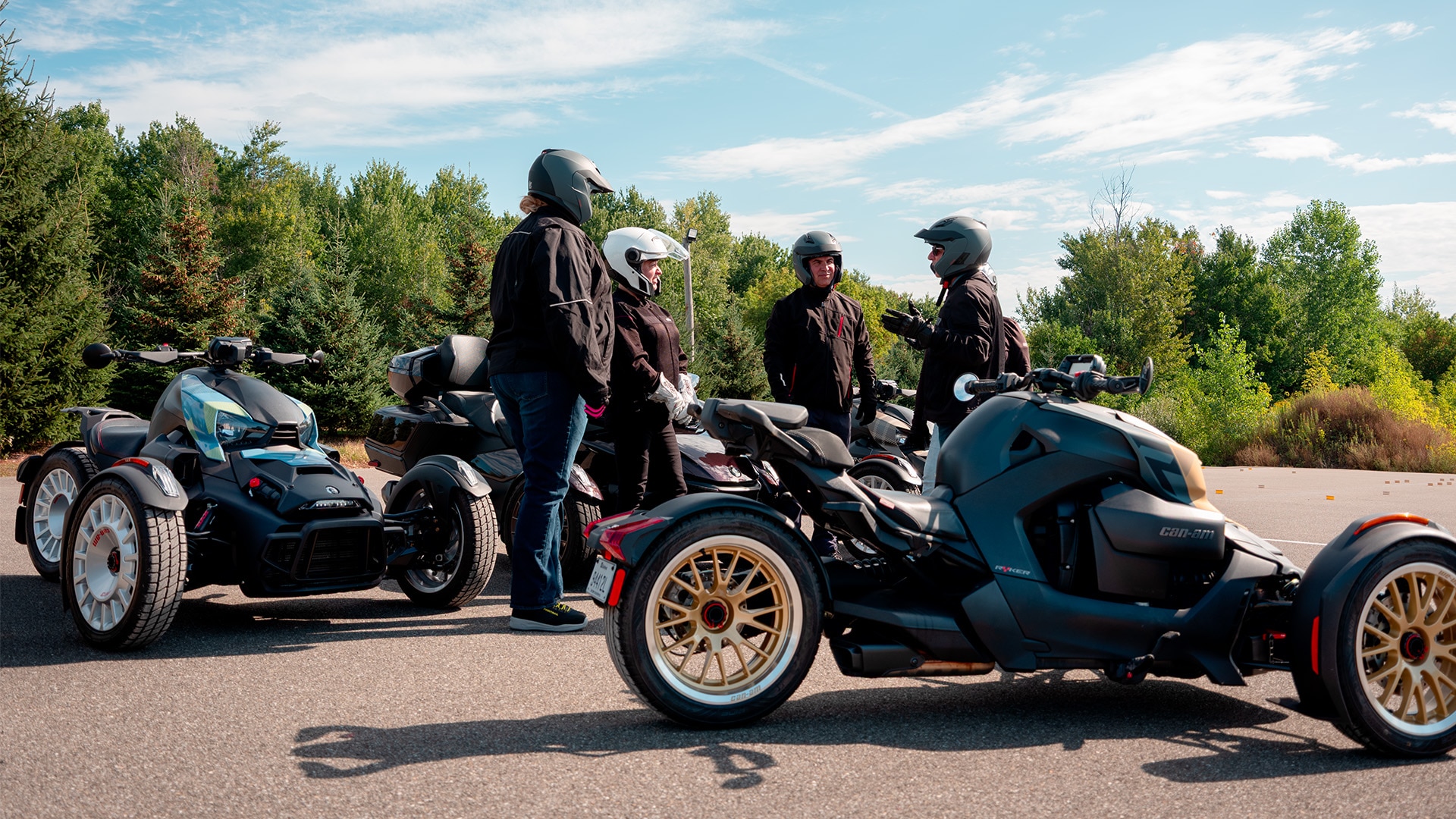
  • Look for a 3-wheel riding course: Programs like the Rider Education Program are available across Canada. These courses offer certified instructors and vehicles to help you learn to ride and work toward your license in a controlled environment.

How the 3-Wheel Licensing Path Differs From Motorcycles

​For many new riders, the 3-wheel path is much more approachable than the traditional motorcycle route:

  • Stability at a Stop: Unlike a two-wheeled bike, a 3-wheel motorcycle remains upright on its own. You don’t need to use your legs to support the vehicle's weight or worry about the bike tipping over when you come to a halt.
  • Focus on the Road, Not Balance: Because the vehicle is inherently stable, you don’t have to spend your first hours of training learning how to stay upright. This allows you to focus entirely on mastering the controls and road safety.
  • Tailored Testing: By testing on three wheels, you are training for the exact experience you want. You aren't forced to learn the complexities of 2-wheel handling if you only plan to ride on three.

Start Riding Your 3-Wheel Motorcycle

​Now that you understand the licensing landscape, you’re one step closer to the unique thrill of 3-wheel riding. Getting licensed on three wheels is often faster and more intuitive than the traditional route, allowing you to spend less time in the classroom and more time experiencing the freedom of the road.

​Ready to get started on the road? Watch the Rider Education Program video to discover how intuitive the experience truly is. Complete the course and take advantage of a Can-Am 3-wheel vehicle purchase incentive.

​You can also join the 3-Wheel Collective and connect with fellow Can-Am Spyder, Ryker, and Canyon enthusiasts to share rides, tips, and experiences.

FAQ About 3-Wheel Motorcycle Licenses

No. A standard driver’s license (Class 5 or G) is not enough to operate a 3-wheel motorcycle in Canada. To ride legally, you must obtain a motorcycle license or a motorcycle endorsement. Since regulations are governed by each province, always verify the specific requirements with your local licensing authority, such as the SAAQ, MTO, or ICBC.

In many provinces, yes. Although these vehicles have three wheels, they are classified as motorcycles. This requires you to hold a valid motorcycle license or a motorcycle endorsement.

​In most provinces, yes. Many jurisdictions allow you to complete your training and road test directly on a 3-wheel vehicle. This can result in a motorcycle license that is restricted to 3-wheel motorcycles. Since rules vary, always verify with your local licensing authority.

​No. While you can often register for a safety course or book appointments online, you must complete your riding test in person. A practical, in-person evaluation is required to obtain the required motorcycle license class or a license restricted to three-wheeled motorcycles.

​Disclaimer: Licensing, registration, and safety requirements for 3-wheel motorcycles are subject to change and vary by province. The information provided here is for general guidance only. Always consult your local licensing authority (such as the SAAQ, MTO, or ICBC) to ensure you are compliant with the most current regulations before riding.